What Really Goes Into the Cost of a Roof Replacement?
Homeowners on the South Shore of Massachusetts often get a quote for a roof replacement and wonder why the number is what it is — or why two houses the same size can carry very different price tags. The answer is that a roof replacement is rarely just shingles. What you see from the street is the finished surface. What drives the cost is everything underneath it, and everything that gets discovered once the old roof comes off.
This article walks through every major cost factor honestly, so you know what you're paying for and why.
Tear-Off: Removing the Existing Roof
Before any new roofing goes on, the old material has to come off. The labor and disposal cost of tear-off depends on how many layers of roofing are already on the house. Massachusetts building code allows a limited number of roofing layers before a full tear-off is required, and many older homes on the South Shore have had shingles installed over shingles more than once.
A single layer of standard architectural shingles is straightforward to remove. Two or more layers — or a combination of shingles over older materials like wood shakes — takes significantly more time and generates more debris. Dumpster fees, disposal costs, and additional labor all add up. This is one of the first questions a roofing contractor should ask before quoting a job.
Hidden Damage: Sheathing, Rot, and Structural Issues
Once the old roofing is stripped, the deck — the plywood or board sheathing underneath — is exposed for the first time in years. This is where surprises happen, and it's one of the most important reasons why an online estimate can only give you a starting range.
Soft spots, rot, delaminated plywood, and deteriorated board sheathing are common findings, especially on older homes or roofs that have had leaks over the years. Any compromised sheathing has to be replaced before new roofing goes down — you cannot install a quality roofing system over a weak deck. The extent of sheathing replacement is impossible to know until the tear-off is complete, which is why experienced contractors build a contingency into their estimates or price sheathing replacement separately per sheet.
In more serious cases, structural framing — rafters, ridge boards, or fascia framing — may also show signs of damage that need to be addressed before the new roof can be installed properly.
Flashing: The Most Overlooked Part of a Roof
Flashing is the metal work that seals the transitions and penetrations in a roof — chimneys, skylights, dormers, walls, valleys, and any pipe or vent that passes through the roof surface. It is also the most common source of roof leaks, and it is frequently the part of a roof replacement that separates a quality job from a shortcut.
On a full roof replacement, all flashing should be inspected and replaced or properly re-integrated. Step flashing along walls and dormers, counter flashing at chimneys, valley flashing, and boot flashings around pipe penetrations all need to be done correctly. Cutting corners on flashing to save money is one of the most reliable ways to end up with a leak within a few years of a new roof.
The complexity of your roof's flashing — how many chimneys, skylights, dormers, and wall transitions it has — directly affects the cost of the job.
Rake Boards, Fascia, and Soffits
The rake boards along the gable ends, the fascia boards behind the gutters, and the soffits underneath the eaves are part of the roofing system even though they're not on the roof surface itself. They protect the roof edges, support the gutters, and close off the eave space from pests and weather.
On many South Shore homes, these boards are wood and have been painted and repainted over the years. By the time a roof replacement is needed, they are often soft, rotted at the ends, or pulling away from the structure. Replacing deteriorated rake boards and fascia at the time of a roof replacement is the right time to do it — the area is already exposed, and new drip edge and flashing can be properly integrated with fresh material.
The extent of trim replacement varies widely from house to house and is another factor that can only be fully assessed during an on-site inspection.
Gutters and Roof Drainage
A new roof and a failing gutter system are a poor combination. Gutters that are pulling away from the fascia, improperly pitched, or too small for the roof area they're draining will cause water to back up against the new roofing and fascia — exactly the conditions that lead to rot and ice dam damage.
If your gutters are at or near the end of their useful life, replacing them at the same time as the roof is worth considering. It allows the new drip edge and fascia work to be properly integrated with the gutter installation, and it avoids having to disturb a new roof edge to address gutter problems a year or two later.
Ridge Vents, Soffit Vents, and Attic Ventilation
Proper attic ventilation is one of the most important — and most frequently neglected — parts of a residential roofing system. Without adequate airflow, heat and moisture build up in the attic space, which shortens the life of the roofing materials, contributes to ice dam formation in winter, and can cause structural damage over time.
A balanced ventilation system uses intake vents at the soffits and exhaust vents at or near the ridge. Ridge vents running the full length of the peak, combined with clear soffit vents, create a continuous airflow path that keeps the attic temperature close to the outside air temperature year-round.
Many older homes on the South Shore have inadequate ventilation — blocked soffit vents, insufficient ridge venting, or a mix of vent types that work against each other. Correcting ventilation at the time of a roof replacement adds cost but protects the investment in the new roof and helps the attic and roofing system perform more efficiently year-round.
Roofing Material Options: Asphalt, Cedar, and Metal
The roofing material you choose is one of the most visible cost drivers, and it affects not just the upfront price but the long-term value and maintenance requirements of the roof. Boston J's works with three primary residential roofing systems.
Architectural Asphalt Shingles
Architectural asphalt shingles — also called dimensional or laminate shingles — are the most common residential roofing material in Massachusetts and the right choice for most South Shore homes. They offer a good balance of durability, appearance, and cost, and they're available in a wide range of colors and profiles to complement different architectural styles.
Boston J's installs quality roofing systems from manufacturers including CertainTeed and GAF. These manufacturers offer strong warranty programs, and the quality of the underlayment, ice and water shield, and accessory products used alongside the shingles matters as much as the shingles themselves. A properly installed CertainTeed or GAF system with the right underlayment and ventilation will significantly outlast a budget installation using the same shingles.
Natural Cedar and Wood Shingles
Natural cedar shingles and shakes have a warmth and character that no manufactured product fully replicates. They're a traditional choice on Cape Cod and the South Shore, and they age beautifully — transitioning from their original honey tone through silver-gray over time.
Cedar roofing costs more than asphalt upfront and requires more attention to installation detail. Proper spacing for drainage and airflow, the right underlayment, and quality flashing work are all critical to a cedar roof's longevity. When installed correctly, a cedar roof can last 30 years or more. When installed poorly, problems appear within a few years.
Cedar is also a material where the skill and care of the installer matters enormously. It's not a product that rewards shortcuts.
Metal Roofing
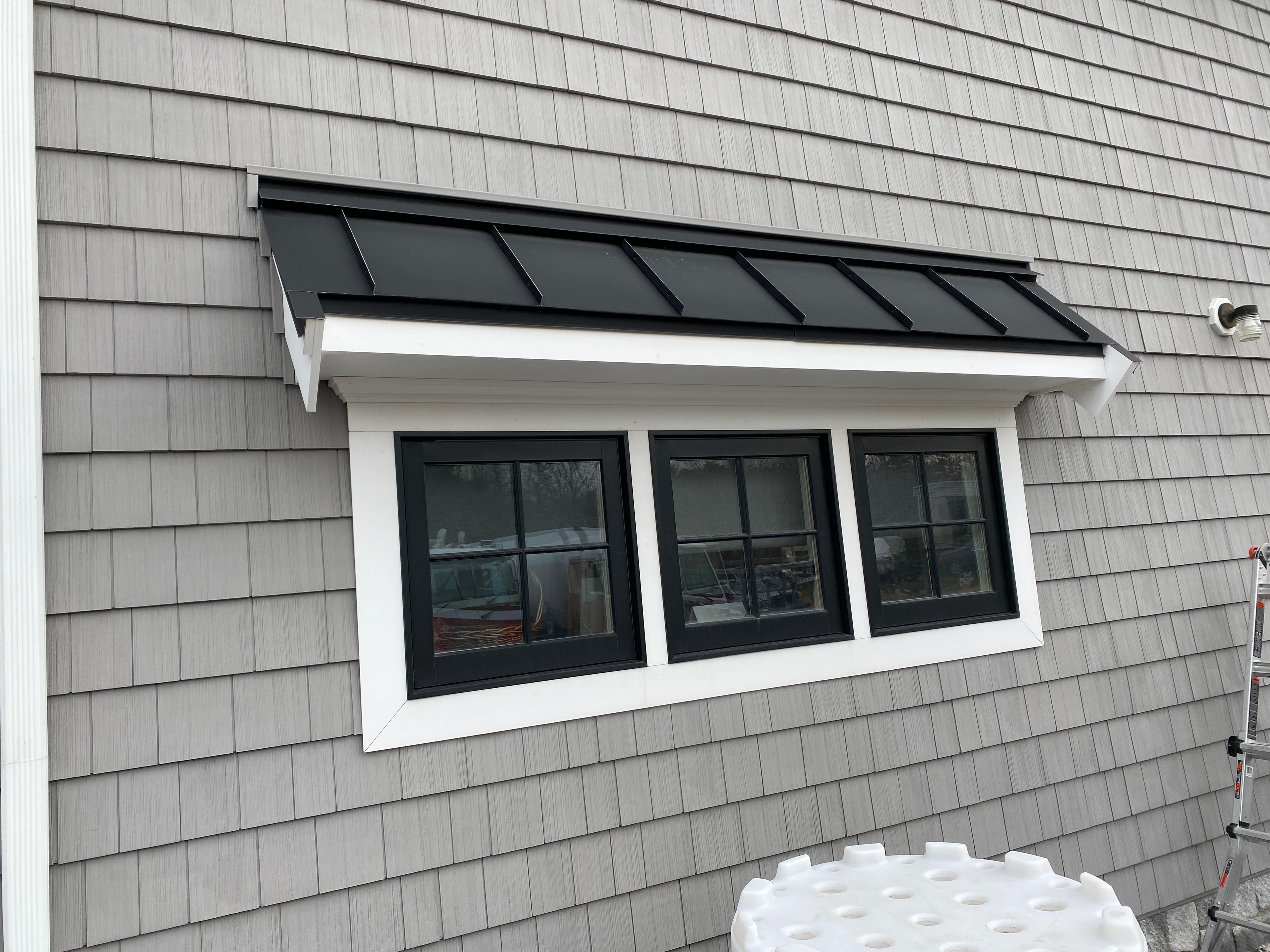
Metal roofing has grown significantly in popularity on residential homes in Massachusetts, and for good reason. A properly installed metal roof can last 50 years or more, sheds snow effectively, and requires minimal maintenance. It's also an excellent choice for lower-slope sections of a roof where asphalt shingles are not appropriate.
Boston J's installs metal roofing both as complete roof systems and as accent panels — over dormers, bay windows, and other architectural features where metal adds a distinctive look and long-term performance. Metal accent work is one of the details that can significantly elevate the appearance of a home's roofline.
Metal roofing carries a higher upfront cost than asphalt, but the longevity and low maintenance requirements make it a strong long-term value for homeowners who plan to stay in their home.
Why Two Similar Houses Can Have Very Different Costs
Square footage is only one variable in a roof replacement price. Two houses with the same footprint can have dramatically different roofing costs based on:
- Roof pitch — steeper roofs require more safety equipment, slower work, and more material
- Roof complexity — hips, valleys, dormers, and multiple intersecting planes add labor and material
- Number of penetrations — each chimney, skylight, and pipe requires careful flashing work
- Existing layers — multiple tear-off layers add disposal cost and labor
- Sheathing condition — rot or damage discovered after tear-off adds material and labor
- Trim condition — deteriorated fascia, rake boards, or soffits that need replacement
- Ventilation upgrades — correcting inadequate attic ventilation at the time of replacement
- Material choice — asphalt, cedar, and metal carry different price points
This is why a price-per-square-foot figure from a neighbor or an online calculator is a starting point, not a quote. The actual scope of your roof replacement can only be determined by someone who has looked at your specific house.
Online Estimators and On-Site Inspections
An online Roof Cost Estimator is a useful tool for getting a realistic ballpark range before you start talking to contractors. It helps you understand whether a project is in the range you're expecting and gives you a basis for evaluating quotes. Boston J's offers a Roof Cost Estimator specifically calibrated for South Shore Massachusetts homeowners.
Use the Roof Cost Estimator to get a personalized ballpark price based on your home's size, stories, roof type, and complexity. It's free, takes a few minutes, and gives you a useful starting range — not a generic number.
The estimator gives you a range. An on-site inspection determines the actual scope. Once a contractor is on your roof and has seen the sheathing condition, the flashing situation, and the trim, the estimate becomes a real number. That's the step that matters before any work begins.
How Boston J's Approaches a Roof Replacement
Boston J's doesn't have commissioned salespeople or unnecessary layers of project managers between you and the work. The owner is directly involved in every project. That structure keeps overhead lower, and the savings go into better materials and more careful workmanship — not into a sales commission.
When we quote a roof replacement, we walk through every item — tear-off, sheathing, flashing, trim, ventilation, and the roofing system itself. We use quality products from manufacturers like CertainTeed and GAF because the system matters as much as the shingles. And we don't cut corners on the details that you can't see once the job is done.
Boston J's serves homeowners throughout the South Shore of Massachusetts and into Southern Maine. See our full service area for the communities we work in.
Ready to Get a Real Number for Your Roof?
Start with the Roof Cost Estimator for a ballpark range, then schedule a free on-site inspection to get an accurate scope and price for your specific home. No high-pressure sales, no commissioned reps — just a straight conversation about what your roof needs.
Visit our Roofing page to learn more about the roofing systems and services we offer, or contact us directly to schedule your free estimate.
Get a Ballpark Price for Your Roof
Use our Roof Cost Estimator for a useful starting range, then schedule a free on-site inspection to nail down the actual scope.